How Many Worksheets 1 - 10: Designing Foundational Learning Tools
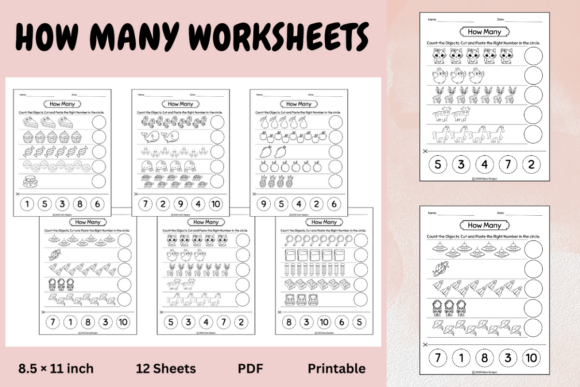
In the realm of educational graphic design, creating assets that are both pedagogically sound and visually engaging is a true mark of professional craft. The How Many Worksheets 1 - 10 set exemplifies this balance, offering a ready-made solution for designers, educators, and content creators who need to produce effective learning materials. This 12-page digital product is more than just a printable; it's a structured design system that combines cut-and-paste activities with count-and-write exercises, demonstrating how thoughtful visual hierarchy and interactive elements can transform foundational math practice into an engaging experience.
The Role of Structured Design in Early Education
Effective educational resources rely on clear visual communication. The worksheets utilize a clean, intentional layout to guide a child's focus. Key design principles at work include:
- Visual Hierarchy: Bold numbers and clear instructions establish a reading and activity order, which is crucial for developing cognitive pathways.
- Consistency: A uniform page structure across the 12 worksheets reduces cognitive load, allowing the child to focus on the task rather than deciphering new layouts each time.
- Tactile Integration: The inclusion of cut-and-paste elements is a deliberate design choice that bridges digital assets with physical, hands-on interaction, enhancing engagement and fine motor skill development.
For designers creating custom educational content or branded learning kits for clients, analyzing this set provides a blueprint for balancing aesthetic appeal with functional clarity—a core tenet of both UI design and editorial design.
Practical Applications Beyond the Classroom
While the primary use is for preschool and kindergarten learning, the underlying design framework has versatile applications for creative professionals. Consider how this structured approach to information can be adapted for:
- Brand Education & Onboarding: Use similar worksheet-style layouts to create engaging, interactive guides for new employees or clients, helping them learn brand terminology, values, or product lines.
- Marketing Collateral: Design activity pages for family-oriented brands in packaging design or print design, adding value and extending brand interaction time.
- Digital Product Creation: The included PDF, PNG, and JPG files highlight the importance of providing assets in multiple formats for different applications, from social media graphics to printable web design elements.
- Presentation Aids: Adapt the count-and-write format into simple, interactive data visualization exercises for internal workshops or client presentations.
Curating and Implementing Creative Assets
When evaluating resources like the How Many Worksheets 1 - 10 set for your projects, consider these design-focused criteria:
- Scalability & Format: Ensure the asset is provided in high-resolution, scalable formats (like PDF and PNG) to maintain quality across print and digital mediums.
- Customizability: Look for assets that can be easily integrated into existing brand identity systems. Simple, clean designs are often more adaptable to different color palettes and typography styles.
- User Journey: Analyze the flow of the activity. Does it logically guide the user from one step to the next? This is a fundamental principle of UX design applied to physical or digital worksheets.
Choosing the right creative assets is about more than just aesthetics; it's about selecting tools that enhance communication and achieve specific goals. Whether you are developing a comprehensive learning module, designing a targeted advertising campaign, or building a library of design assets